
Financial  Planning Software

Brandon Galici, CFP®
"...As I delve deeper into the software, I realize just how much Elements streamlines my entire business model. From onboarding to communication, it has revolutionized the way I interact with clients."

Billy Zerillo
"I’ve only used Elements for a month and I already got a new client. I showed them how I could answer their questions using the Scorecard. Before Elements, I couldn’t have had that same conversation."

Shehara Wooten
"The ability to be able to collect information more readily, more easily, and on top of that, to be able to see their scorecard all in one place and easily talk about, for instance, the Element Total Term and help them interpret that... it's a different way for them to see their financial wellness, their financial life."

Michael Hathaway
"Elements makes it simple and easy to show clients where they are today, how much progress we've made working together, and where they can go in the future. For delivering this value on an ongoing basis, I think Elements is fantastic."

Grant Botma
"Elements has helped us attract new clients through its powerful call-to-action options. Instead of just scheduling an appointment on our website, we can now offer a free assessment. Clients can start by filling out information within the Elements app, and we can then provide them with an accurate assessment of their financial situation. This builds a relationship with them even before they click the "schedule an appointment" button."

Becky Walsh, CFP®, CAP®
"Elements is SO intuitive. Yet it’s not simplistic: it allows us to address complex questions with elegant simplicity."
How much wealth do you need to make work optional?
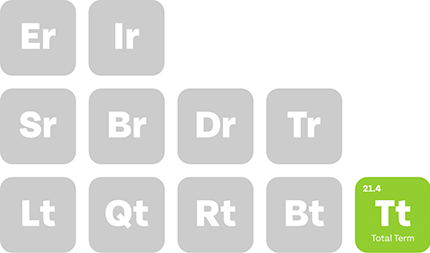
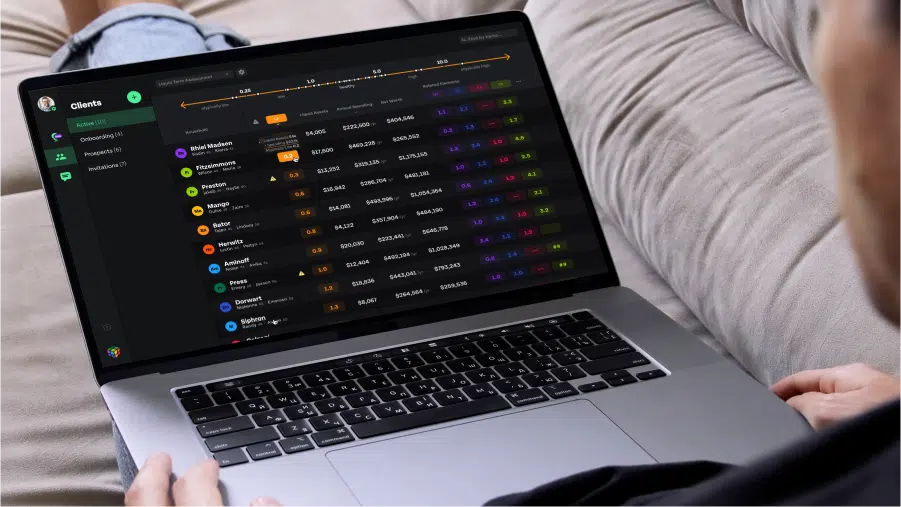
Tt (Total Term) indicates how long you could live on your current wealth if it did not grow.
Tt provides a conservative estimate of how many years you could survive if you stopped working today. It's calculated by dividing net worth by annual living expenses. It is also a summation of the four blocks to its left which represent each asset type: Lt (Liquid Term), Qt (Qualified Term), and Rt (Real Estate Term). There's also a bonus Element for business owners: Bt (Business Term).
Do you have the right mix of assets?
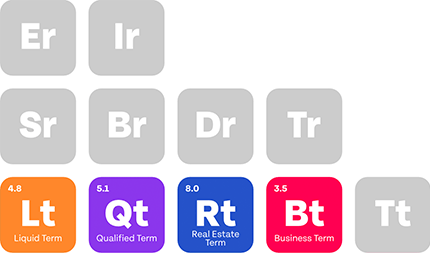
The three Elements to the left of Tt (Total Term) provide a clear view of your asset distribution.
These Elements represent three of the four asset types in a person's portfolio (the fourth is a business and Business Term is a bonus Element for business owners), and when added together, they create your Tt. They also help you and your advisor understand if there's an opportunity for better diversification.
Are you using your income wisely?
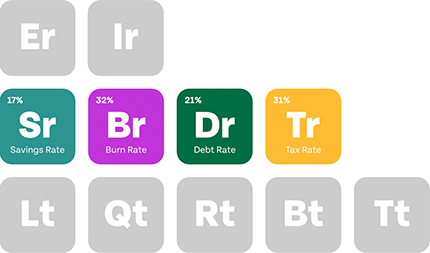
The middle row of the Elements table address your cash flow.
These Elements calculate the percentage of your total income that goes toward savings (Savings Rate), spending (Burn Rate), debt (Debt Rate), and taxes (Tax Rate). These are the only four places your income can go and it's important to keep them optimized to accelerate growth.
Are you taking the right amount of risk?
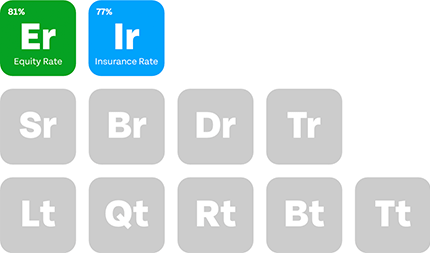
These Elements indicate the risk levels within your investment portfolio, estate planning, and insurance profile respectively.
The top row of the Elements table contains Er (Equity Rate) and Ir (Insurance Rate). The amount of risk you should take in each area will depend on several factors including your tolerance for risk, career phase, liquidity, and financial goals.
Equity Rate
Helps us determine whether the client will experience too much volatility risk for their personal level of spending and age.
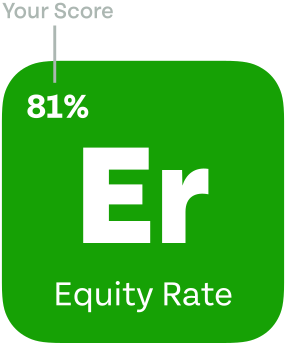
Equity rate (Er) is calculated by dividing your equity investment holdings by the total amount of investable assets you own.
Estate Status
Helps determine how prepared you are to answer end-of-life financial questions.
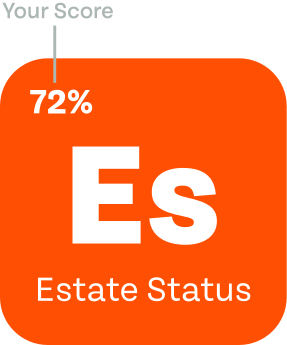
Estate status (Es) is calculated by dividing the current amount of estate planning you've completed and had reviewed by the amount of estate planning you still need.
Insurance Rate
Measures how much insurance you have compared to how much you need based on annual spending and net worth. Coverage is evaluated for the following types of insurance: life, general disability, business overhead disability, buy-sell, key person, personal liability, and business liability.
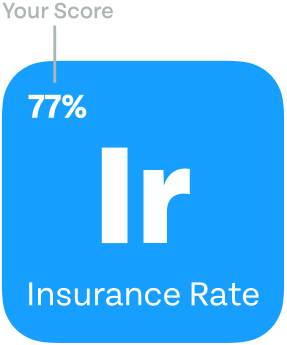
Insurance rate (Ir) is calculated by dividing the life and disability insurance coverage you have by the coverage you still potentially need.
Savings Rate
Indicates how much of your income is being saved for future expenses, emergencies and retirement. Also an indicator of your overall financial security.
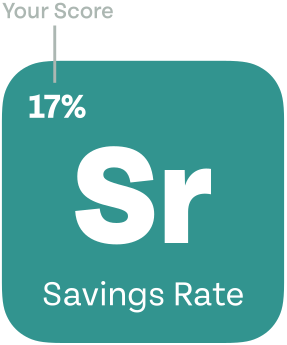
Savings rate (Sr) is calculated by dividing your annual savings by your total personal income. Savings includes deposits made to investment accounts and other savings accounts.
Burn Rate
Burn Rate indicates how much of your income is used for living expenses. It helps you understand your spending patterns and retirement preparedness.
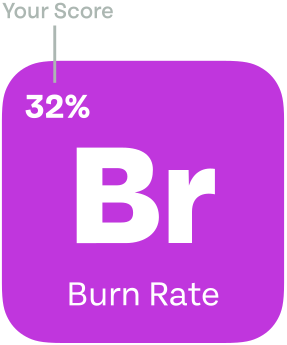
Burn rate (Br) is calculated by dividing your annual living expenses by your total personal income. It indicates how much of your income is used for personal expenses.
Debt Rate
Indicates whether you are servicing too much or too little debt for your individual circumstances
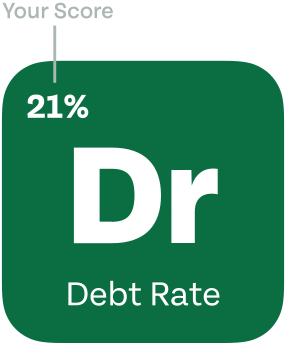
Debt rate (Dr) is calculated by dividing your annual debt payments by total personal income.
Tax Rate
Tax Rate helps you determine if your tax liability could be reduced with better tax planning.
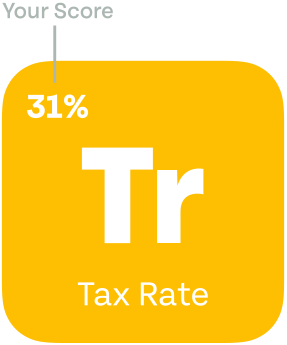
Tax rate (Tr) is calculated by dividing your annual total taxes by your total personal income.
Liquid Term
Estimates the number of years you could live on cash or cash-like assets outside of retirement plans. Also indicates the amount of after-tax money you could access if needed.
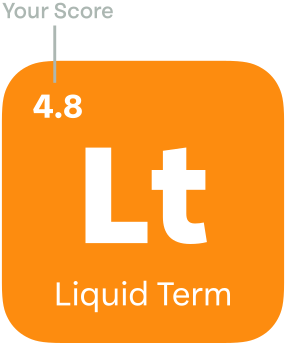
Liquid term (Lt) is calculated by dividing your total liquid assets by your estimated annual living expenses.
Qualified Term
Estimates the number of years you could live on the assets you have within qualified plans assuming withdrawals are for qualified purposes (ignoring inflation, taxes, and fees).
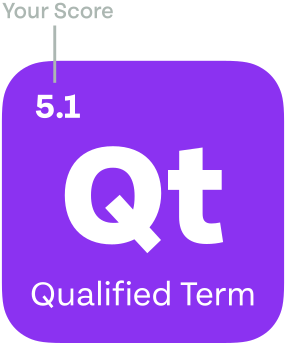
Qualified term (Qt) is calculated by dividing your total retirement accounts by your estimated annual living expenses.
Real Estate Term
Estimates the number of years you could live on your current real estate equity and how much of your wealth is concentrated in real estate.
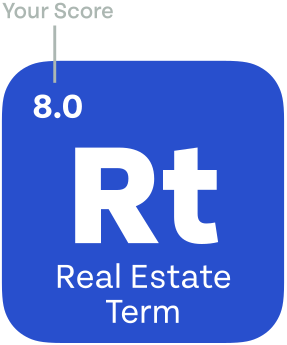
Real estate term (Rt) is calculated by dividing the sum of all your total real estate equity by your estimated annual living expenses.
Business Term
Estimates the number of years you could live on your current business equity (ignoring inflation, taxes and fees). It also indicates how much of your wealth is concentrated in the business.
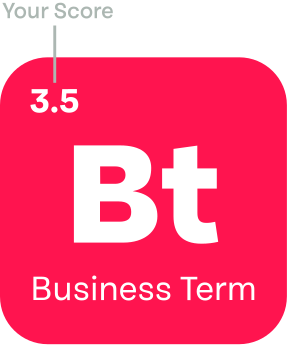
Business term (Bt) is calculated by dividing your total business equity by your annual living expenses.
Total Term
Estimates the number of years you could live on your current assets (cash, investments, business value, real estate equity, etc.) if they didn't grow.
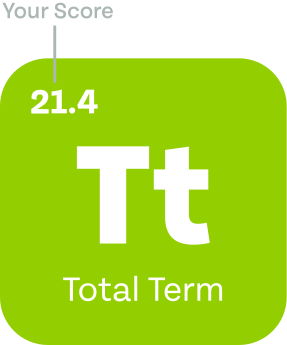
Total term (Tt) is calculated by dividing your current net worth by your estimated annual living expenses.




Love
From the
Advisor
Community


Scott Frank, CFA, CFP®
IMO the best thing about Elements is that it works with existing clients JUST AS WELL as it will work with people who don’t get access to financial planning in the current market.

Phil Telpner
I believe what separates a good advisor from a great one is the skill to plan for the future and the present. A great advisor needs to help clients do both. Elements helps me do that.

Tyler Hackenberg, CFP®
Why I love Elements. I had a client who asked me, “can I slow down at work and spend some time with the kids?” I got to jump up and down with the client and say, "yes." Of course, some opportunities still need to be fleshed out, but quickly being able to say "yes" was incredible.

Joel Holden
Elements can completely change the conversation advisors have with clients. The ability to use the Elements to demonstrate clients' progress in specific areas is a game changer.

Ed Kinsey
Elements enables what I've been trying to do with clients for more than a decade. Provide a holistic service within a price range that isn't detrimental to the clients' portfolio success.

Daniel Crosby, Ph.D.
Great tech, killer design, and two great dudes [leading the way]. I’m a believer.